Una cámara limpia no acredita que la zona esté vacía. Una lona cerrada no demuestra una masa ni cargas por eje admisibles. Se conectan clasificación, posicionamiento, evidencia de carga y entrega, conservando los controles de polvo, cortes, giro, entoldado y lavado.
Identificar RCD, separar personas, verificar carga y cerrar entrega
Este contenido de referencia se ha redactado y revisado con IA. No ha sido verificado ni aprobado por un profesional. Antes de aplicarlo se requiere revisión profesional competente y autorización en obra.
Detener trabajo
Parar ante personas en maniobra, pérdida de señal, residuo incierto, acopio o terreno inestable, freno defectuoso, masa desconocida, fallo de compuerta o lona y salida sin visibilidad. Registrar causa y retener el ciclo afectado.
1. Marco legal y técnico
| Base | Límites de aplicación |
|---|---|
| BOE - RD 1627/1997 | Texto oficial indexado: organización, circulación, almacenamiento y retirada; no certifica este plan. |
| BOE - RD 105/2008 | Texto consolidado abierto: clasificación, inventario peligroso, gestión y entrega; aplicación autonómica y municipal. |
España: el RD 1627/1997 encuadra la organización preventiva de obra; el RD 105/2008 regula RCD y documentación de entrega. Esta JSA no sustituye al PSS ni acredita cumplimiento. La consolidación BOE es informativa; comprobar publicaciones y modificaciones aplicables.
RD 1215/1997, RD 2177/2004, RGC art. 14 y UNE del original se conservan en archivo, sin afirmar revisión íntegra. Comprobar Ley 7/2022, régimen de traslado, documentos autonómicos y permiso del gestor. No se universalizan altura de barandilla, pendiente, velocidad ni salida del conductor.
2. Alcance y datos necesarios
Alcance incluido
RCD no peligrosos y separados: acopio, posición del camión, carga, masa, lona, lavado, salida y recepción. El vuelco de descarga se trata como interfaz; requiere el plan específico del receptor.
Revisión separada
Amianto sospechoso, tierras contaminadas, recipientes desconocidos, residuos calientes, estabilidad de demolición, trituración, cargas suspendidas y reparación bajo caja elevada exigen planificación especializada separada.
| Datos necesarios | Qué comprobar |
|---|---|
| Identificar RCD | Descripción del residuo · Informe previo · Habilitación transporte · Permiso del gestor |
| Acopio y vías | Estado del acopio · Plano de barreras · Control del polvo · Revisión del firme |
| Posicionar camión | Ruta despejada · Refugio del señalista · Revisión del freno · Visibilidad |
| Masa y compuerta | Registro de pesaje · Límites del vehículo · Estado del cierre · Ausencia de salientes |
| Entoldado | Estado de lona · Método de acceso · Aislamiento · Revisión de cierre |
| Entrega y cierre | Instrucciones del gestor · Gálibo superior · Justificante y cantidad · Autoridad de reinicio |
No se establecen pendiente, velocidad, presión de agua, clase respiratoria ni porcentaje de llenado universales. Revisar terreno, residuo, exposición y manuales del camión, excavadora, implemento y lona. No se consultaron normas de pago ni manuales de un modelo. Las guías extranjeras no son legislación española.
Seleccionar guantes anticorte y calzado antiperforación para cascotes, alta visibilidad en tráfico y protección ocular, facial y antideslizante para lavado. El respirador requiere selección por exposición, ajuste y formación. Separar recogida manual y maquinaria; aislar implementos antes de desatascar. Identificar líneas aéreas antes de mover brazo o elevar caja.
3. JSA en ocho fases
| Fase de trabajo | Peligros y efectos | Factores de fallo | Medidas técnicas y organizativas | Verificación en obra | P | S | R | A |
|---|---|---|---|---|---|---|---|---|
| 1. Identificar RCD | 1. Inhalación de polvo2. Cortes por acero3. Amianto oculto4. Destino incorrecto | 1. Fracciones mezcladas2. Inspección ausente3. Contaminante desconocido4. Código no admitido | 1. Clasificar antes de mover2. Aislar residuos dudosos3. Confirmar aceptación4. Planificar trabajo especial | 1. Descripción del residuo2. Informe previo3. Habilitación transporte4. Permiso del gestor | ||||
| 2. Acopio y vías | 1. Derrumbe del acopio2. Atropello3. Dispersión de polvo4. Fallo del terreno | 1. Pie socavado2. Acceso compartido3. Manipulación en seco4. Suelo reblandecido | 1. No pisar el acopio2. Separar vías peatonales3. Controlar polvo en origen4. Revisar suelo y drenaje | 1. Estado del acopio2. Plano de barreras3. Control del polvo4. Revisión del firme | ||||
| 3. Posicionar camión | 1. Atropello en retroceso2. Atrapamiento trasero3. Desplazamiento4. Vuelco | 1. Cámara sucia2. Pérdida de señal3. Borde débil4. Fallo de freno | 1. Evitar marcha atrás2. Acordar guiado seguro3. Parar al perder contacto4. Inmovilizar el vehículo | 1. Ruta despejada2. Refugio del señalista3. Revisión del freno4. Visibilidad | ||||
| 4. Cargar con pala | 1. Golpe por giro2. Caída de cascotes3. Impacto en cabina4. Acero enganchado | 1. Persona en radio de giro2. Cazo sobrecargado3. Giro sobre cabina4. Escombros trabados | 1. Excluir personas del giro2. No pasar sobre cabina3. Cargar bajo y repartido4. Parar ante enganches | 1. Zona de exclusión2. Posición del conductor3. Estado del implemento4. Reparto de carga | ||||
| 5. Masa y compuerta | 1. Sobrecarga2. Corrimiento de carga3. Vertido en carretera4. Golpe de compuerta | 1. Volumen sin pesaje2. Ejes desequilibrados3. Cierre defectuoso4. Cascotes en bordes | 1. Revisar masa y ejes2. Redistribuir sin exposición3. Asegurar compuerta4. Retirar piezas sueltas | 1. Registro de pesaje2. Límites del vehículo3. Estado del cierre4. Ausencia de salientes | ||||
| 6. Entoldado | 1. Caída desde caja2. Atrapamiento con lona3. Proyección de residuos4. Pellizco | 1. Subir por ruedas2. Lona rota3. Accionamiento imprevisto4. Acceso improvisado | 1. Operar desde el suelo2. Usar acceso protegido3. Aislar antes de ajustar4. Comprobar contención | 1. Estado de lona2. Método de acceso3. Aislamiento4. Revisión de cierre | ||||
| 7. Lavado y salida | 1. Resbalón por lodo2. Inyección de agua3. Colisión vial4. Escorrentía sucia | 1. Desagüe obstruido2. Acople dañado3. Visión bloqueada4. Vertido sin control | 1. Despresurizar al reparar2. Recoger agua de lavado3. Fijar velocidad local4. Separar cruces peatonales | 1. Revisión de manguera2. Estado del desagüe3. Visibilidad en salida4. Ruta autorizada | ||||
| 8. Entrega y cierre | 1. Vuelco al descargar2. Contacto eléctrico3. Residuo sin trazabilidad4. Relevo inseguro | 1. Suelo de descarga débil2. Caja elevada en marcha3. Falta de justificante4. Defecto pendiente | 1. Aplicar plan del receptor2. Bajar caja antes de salir3. Conciliar justificante4. Entregar pendientes | 1. Instrucciones del gestor2. Gálibo superior3. Justificante y cantidad4. Autoridad de reinicio |
El PDF A trata los controles básicos; B, los fallos técnicos; C, la supervisión, los registros y la entrega. El texto tiene ocho fases con cuatro puntos por celda principal; cada PDF tiene seis fases con tres puntos. P/S/R/A, mediciones, comprobaciones y firmas se dejan en blanco para la evaluación real.
4. Situación ficticia y mecanismos de fallo
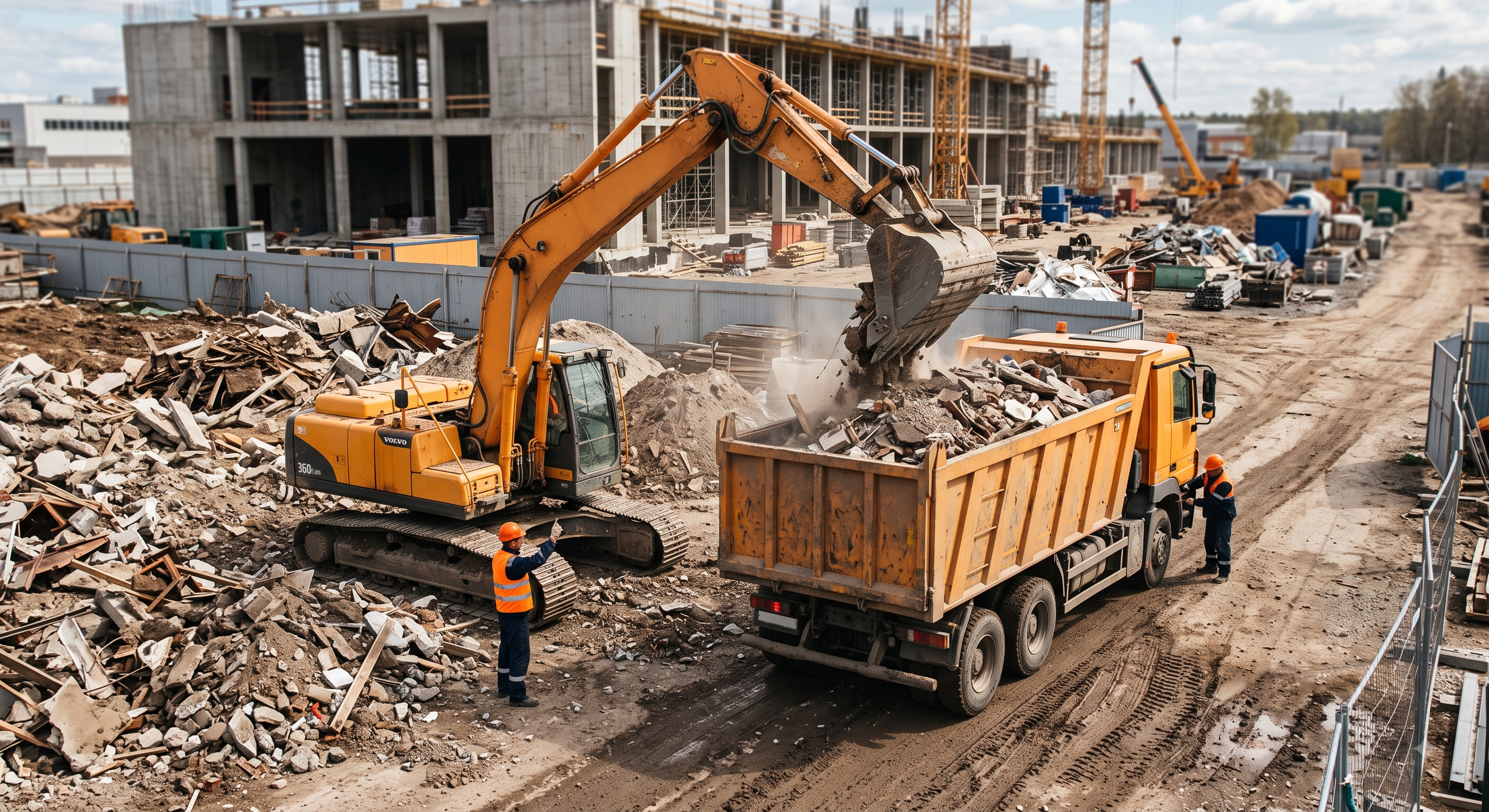
Ilustración didáctica generada con IA y conservada; no es una fotografía de un accidente real.
La situación y las comparaciones de registros son ejemplos didácticos ficticios; no acreditan accidentes, mediciones, inspecciones, firmas ni autorizaciones reales.
| Elemento | Situación ficticia |
|---|---|
| Situación inicial | Un camión espera junto al acopio mientras un operario recoge metal en el límite. |
| Cambio | La lluvia ensucia la cámara; el paso peatonal está abierto y el refugio del señalista ocupado. |
| Vía de fallo | Suena la alarma, pero no se confirma que la ruta ni el giro de la excavadora estén libres. |
| Posible resultado | Continuar podría atrapar a la persona entre compuerta y máquina o acopio; es una posibilidad ficticia. |
| Barrera preventiva | Parar ambos movimientos, vaciar y separar la zona, recuperar visión y acordar un guiado protegido. |
Mecanismos de fallo
La alarma avisa, pero no detecta a todas las personas ni crea espacio de frenado. Ruido, atención y protección auditiva alteran la percepción. Una fórmula simple de propagación no demuestra audibilidad real; no usar personas como blancos de prueba.
Contrapeso y cazo barren espacios distintos. Considerar camión, barreras y escape del señalista. El conductor ocupa la cabina protegida o refugio que determine el plan; obligarlo siempre a bajar puede introducirlo en el giro.
El hormigón húmedo puede agotar masa o carga por eje sin llenar la caja. La lona no corrige sobrecarga ni estabiliza bloques grandes. Tras redistribuir, revisar de nuevo masa y reparto.
El agua reduce polvo, pero puede ablandar el firme y crear lodo o escorrentía. Seleccionar controles y protección respiratoria según exposición; no ver polvo no acredita ausencia de sílice respirable.
Secuencia de decisión
| Paso de revisión | Qué comprobar |
|---|---|
| Hechos conocidos | Hechos: cámara sucia y refugio bloqueado. |
| Cuestiones abiertas | Pendiente: presencia de personas y visibilidad del nuevo puesto del señalista. |
| Motivo de espera | Espera: la alarma operativa no basta para liberar la maniobra. |
| Evidencia necesaria | Evidencia: ruta libre, acceso cerrado, visión, señal acordada y refugio seguro. |
| Decisión de reinicio | Reinicio: responsable designado revisa la configuración; repetir tras entradas, cambios o pérdida de contacto. |
5. Decisiones condicionadas y errores
| Condición | Acción | Evidencia | Continuar tras |
|---|---|---|---|
| Residuo desconocido | Aislar y clasificar | Informe, código y aceptación | Residuo identificado |
| Sin contacto | Parar circulación y carga | Puesto y comunicación | Contacto restablecido |
| Masa desconocida | Retener salida; comprobar masa | Masa y cargas por eje | Límites cumplidos |
| Lona dañada | Reparar con acceso seguro | Estado y cierre | Contención restablecida |
Situaciones similares, decisiones distintas
La situación y las comparaciones de registros son ejemplos didácticos ficticios; no acreditan accidentes, mediciones, inspecciones, firmas ni autorizaciones reales.
| Comparación | Situación A | Situación B |
|---|---|---|
| Cámara | Imagen limpia: ayuda disponible | Aún hay que despejar y controlar acceso |
| Carga | Lona cerrada: limita dispersión | Masa y ejes necesitan otra comprobación |
| Entrega | Documento emitido | Faltan recepción y conciliación de cantidad |
6. Funciones y responsabilidades
| Función | Responsabilidad |
|---|---|
| Dirección del trabajo | Confirmar clasificación, aceptación y secuencia de camiones. |
| Revisión técnica | Verificar firme, límites, implemento y acceso del equipo concreto. |
| Equipo de trabajo | Operadores y señalista acuerdan señales y paran si pierden contacto. |
| Inspección / evaluación | Comprobar masa, cierre, lavado y salida; registrar el alcance real. |
| Autorización / entrega | Conciliar recepción y cantidad, trasladar pendientes y respetar facultades de autorización. |
Supervisión y entrega
| Fase de trabajo | Medidas técnicas y organizativas | Verificación en obra |
|---|---|---|
| Autorizar alcance | 1. Confirmar identidad RCD2. Verificar aceptación3. Asignar autoridad de espera | 1. Descripción del residuo2. Informe previo3. Permiso del gestor |
| Informar conductor | 1. Explicar ruta de sentido único2. Acordar señalista y señales3. Confirmar refugio | 1. Ruta despejada2. Refugio del señalista3. Visibilidad |
| Autorizar carga | 1. Mantener separación2. Confirmar puesto del chófer3. Parar ante cambios | 1. Zona de exclusión2. Posición del conductor3. Reparto de carga |
| Autorizar lona | 1. Revisar evidencia de masa2. Asignar acceso seguro3. Controlar aislamiento | 1. Estado de lona2. Método de acceso3. Revisión de cierre |
| Autorizar salida | 1. Revisar lona y portón2. Confirmar drenaje3. Vincular carga y documentos | 1. Revisión de manguera2. Estado del desagüe3. Ruta autorizada |
| Cerrar entrega | 1. Conciliar recepción2. Resolver rechazo3. Asignar defectos abiertos | 1. Instrucciones del gestor2. Gálibo superior3. Autoridad de reinicio |
7. Puntos de espera y registros
| Punto de espera | Evidencia para liberar | Confirmación / autorización |
|---|---|---|
| Inicio | RCD no peligrosos y separados: acopio, posición del camión, carga, masa, lona, lavado, salida y recepción. El vuelco de descarga se trata como interfaz; requiere el plan específico del receptor. | |
| HP-1 Identificar RCD | Descripción del residuo · Informe previo · Habilitación transporte · Permiso del gestor | |
| HP-2 Posicionar camión | Ruta despejada · Refugio del señalista · Revisión del freno · Visibilidad | |
| HP-3 Masa y compuerta | Registro de pesaje · Límites del vehículo · Estado del cierre · Ausencia de salientes | |
| HP-4 Lavado y salida | Revisión de manguera · Estado del desagüe · Visibilidad en salida · Ruta autorizada |
Rellenar tras comprobaciones reales. Revisar tras cambios, anomalías o relevo.
Ejemplos de registros
La situación y las comparaciones de registros son ejemplos didácticos ficticios; no acreditan accidentes, mediciones, inspecciones, firmas ni autorizaciones reales.
Las casillas son ayudas estáticas para registrar datos. Marcarlas no acredita conformidad ni autoriza reiniciar. Documente evidencia, persona, momento, cuestiones abiertas e historial de cambios.
| Registro | Anotación insuficiente | Lista para el registro |
|---|---|---|
| Retroceso | «Cámara bien» | □ Camión y zona□ Ruta y refugio libres□ Señal y señalista□ Persona, hora y restricción |
| Carga | «No está lleno» | □ Límites totales y por eje□ Masa y método□ Reparto y compuerta□ Ajuste y nueva revisión |
| Lona | «Lona puesta» | □ Acceso y aislamiento□ Estado y anclaje□ Bordes y cierre□ Revisor, hora y defecto |
| Entrega | «Camión salió» | □ Código y cantidad□ Transportista y gestor□ Justificante y diferencia□ Responsable y cierre |
8. Lista de comprobación y emergencia
| Comprobación | Resultado | Persona / acción |
|---|---|---|
| □ Identificar RCD: Descripción del residuo | ||
| □ Acopio y vías: Estado del acopio | ||
| □ Posicionar camión: Ruta despejada | ||
| □ Cargar con pala: Zona de exclusión | ||
| □ Masa y compuerta: Registro de pesaje | ||
| □ Entoldado: Estado de lona | ||
| □ Lavado y salida: Revisión de manguera | ||
| □ Entrega y cierre: Instrucciones del gestor | ||
| □ Autorización / entrega |
Detener trabajo
Parar ante personas en maniobra, pérdida de señal, residuo incierto, acopio o terreno inestable, freno defectuoso, masa desconocida, fallo de compuerta o lona y salida sin visibilidad. Registrar causa y retener el ciclo afectado.
Emergencia
Detener e inmovilizar equipos sin entrar en la zona de atrapamiento. Alejar a terceros y activar la respuesta de emergencia indicando lugar y material. No improvisar un rescate con la excavadora. Una posible inyección a presión requiere valoración médica urgente.
9. Fuentes y límites de revisión
2026-10-08
| Fuente | Alcance y limitaciones |
|---|---|
| BOE - RD 1627/1997 | Texto oficial indexado: organización, circulación, almacenamiento y retirada; no certifica este plan. |
| BOE - RD 105/2008 | Texto consolidado abierto: clasificación, inventario peligroso, gestión y entrega; aplicación autonómica y municipal. |
Este contenido de referencia se ha redactado y revisado con IA. No ha sido verificado ni aprobado por un profesional. Antes de aplicarlo se requiere revisión profesional competente y autorización en obra.
10. Uso de PDF y preguntas frecuentes
El PDF A trata los controles básicos; B, los fallos técnicos; C, la supervisión, los registros y la entrega. El texto tiene ocho fases con cuatro puntos por celda principal; cada PDF tiene seis fases con tres puntos. P/S/R/A, mediciones, comprobaciones y firmas se dejan en blanco para la evaluación real.
ID del grupo
jsa-construction-waste
¿Basta cerrar la lona?
No. Revisar masa, ejes, estabilidad, cierre, ruta, documentos y aceptación.
¿Debe bajar siempre el conductor?
Debe ocupar el lugar protegido previsto en el plan evaluado; bajar sin criterio puede exponerlo al giro.
¿Valen las cifras originales?
Solo si se justifican para el terreno y equipo reales; no son límites certificados.
¿El documento de transporte cierra el trabajo?
No. Vincularlo al justificante de recepción, resolver discrepancias y entregar defectos pendientes.
¿El documento ha sido verificado o aprobado por un profesional?
No. Se han revisado fuentes públicas y aspectos editoriales, de formato y coherencia con IA. No se ha realizado inspección en obra ni aprobación técnica profesional. Solicite revisión competente antes de usarlo.
11. Historial y elaboración
Este contenido de referencia se ha redactado y revisado con IA. No ha sido verificado ni aprobado por un profesional. Antes de aplicarlo se requiere revisión profesional competente y autorización en obra.
| Fecha | Versión | Cambio | Estado de revisión |
|---|---|---|---|
| 2026-09-13 | Original sin versión indicada | Original conservado | Sin aprobación profesional |
| 2026-10-08 | 1.1 | Decisiones, registros, JSA y PDF revisados | Sin aprobación profesional |
Se conservan controles útiles de polvo, cortes, separación, carga, lona y lavado. Se corrigen la supuesta investigación de ITSS dentro de una ficción, puntuaciones prefijadas, valores universales y promesas de conformidad automática. PSS y autorización de obra no se sustituyen por esta JSA.